Attributes of God: resources for kids and adults

We’ve just begun a new sermon series entitled ‘Behold Your God’ - focusing in on what are known as the ‘Attributes’ of God. Below is a list of books on God’s attributes, compiled by Rev. Robert McCollum (Lisburn RPC).

Screenshot 2021-01-12 at 23.04.33.png

The books by Charnock (a massive Puritan treatise) and Pink (more accessible) are available online for free. Interestingly, former Stranraer minister William Symington wrote a biographical introduction to Charnock for one edition of Existence and Attributes, which you can read on our website here.

Screenshot 2021-01-12 at 22.27.39.png
Screenshot 2021-01-12 at 17.13.29.png
Screenshot 2021-01-12 at 17.13.37.png

The video below gives a more detailed introduction to The Attributes of God for Kids - additional resources for it can be downloaded here. We will email parents with worksheets on each attribute prior to the sermon on it.

Three new members

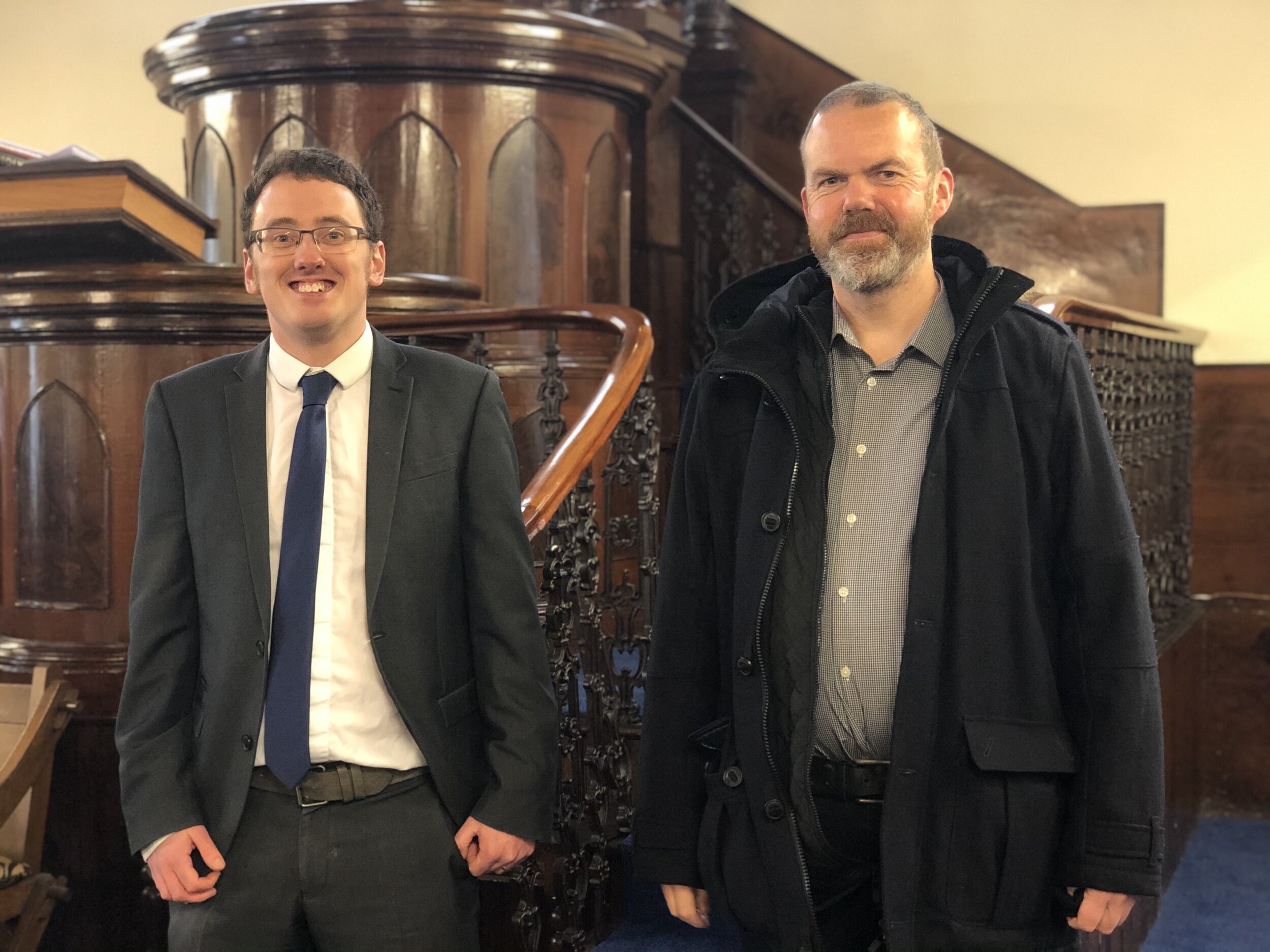
Last month we were delighted to welcome James and Katie (and Thomas and Luke), and Ian, into church membership.

IMG_6104.jpeg

James and Katie transferred their membership from the RP Church in Glasgow, having moved to Stranraer earlier in the year. Ian joined upon profession of faith.

IMG_6076.jpeg

In what has been a difficult year for churches, this was undoubtedly one of the highlights. We are thankful to God for his goodness.

Can we save Christmas?

IMG_6075.jpeg

One of the big themes of recent weeks has been the need to ‘save Christmas’. In the build-up to the announcement of Christmas ‘bubbles’, more than one newspaper headline declared ‘Two weeks to save Christmas’! When the announcement did come – three-household bubbles for five days, combined with the reopening of shops in many places – it was enthusiastically greeted as Christmas being ‘saved’. However, our political leaders continue to warn us not to get carried away, and news in recent days of a new strain of coronavirus has dampened enthusiasm. For a completely normal Christmas, we’ll have to wait till 2021 – if God spares us.. But still – the message remains that our actions over these days will be what saves Christmas this year.

Yet surely it’s all a bit ironic? Cast your mind back to the Christmas story and it couldn’t be more different. There was a ruler and a crisis summit, but King Herod had no intention of ‘saving Christmas’. In fact, it was the opposite; he did his level best to put the baby Jesus to death. The wise men were sent to Bethlehem under instructions to come back and tell him where Jesus was – ostensibly in order that he could worship him, but really so that he could kill him. So the idea of a government ‘saving Christmas’ is somewhat amusing since the government of Jesus’ day did everything it could to stop it before it started.

EnWJim6XcAMYLlV.jpg

Now, as a Christian, I have to admit that the Bible doesn’t tell us to celebrate Jesus’ birth. The idea of doing so didn’t occur to Jesus’ followers until hundreds of years after Mary and Joseph arrived in Bethlehem. Charles Dickens may not quite be ‘The Man Who Invented Christmas’ as the title of an enjoyable 2017 film declares, but many of the supposedly age-old traditions we associate with Christmas are newer than we realise. ‘Jingle Bells’ was originally written for the American holiday of Thanksgiving, carols are Christianised Victorian pub songs, and it is very unlikely that Jesus was born in December (the shepherds and their sheep would not have been outside!).

9780241267738.jpg

In fact, if you need an inexpensive stocking filler, I would recommend a cracking little book called A Christmas Cornucopia by Sunday Times bestselling author Mark Forsyth, which aims to uncover the hidden stories behind our Yuletide traditions. An endorsement on the front cover by Matthew Parris sums it up: ‘Everything we thought about Christmas is wrong! Great stuff!’

In light of the evidence, it’s too simplistic to write Christmas off as either ‘Victorian’ or ‘Pagan’. But it also a bit much to talk about ‘Getting back to the real meaning of Christmas’, ‘the commercialisation of Christmas’ or indeed ‘Putting Christ back into Christmas’. Many have a desire to ‘get back to’ something that never really existed in the first place.

One of my favourite quotes from the book reads as follows: ‘Once upon a time, there was no such thing as Christmas And then Jesus was born in Bethlehem, and after that there was still no such thing as Christmas. For hundreds of years’.

And yet the birth of Jesus Christ in Bethlehem is still the most significant birth that has ever taken place. And if we take ‘Christmas’ as shorthand for Jesus coming into the world, then there is an even greater irony in the calls for us to ‘save Christmas’. Any time a leader tells us to “do our bit to save Christmas”, they unwittingly get things back to front.

Before Jesus’ birth, the angel told an apprehensive Joseph that ‘he will save his people from their sins’ (Matthew 1:21). As Jesus grew up, he lived the life of perfect obedience that we have so dismally failed to achieve, as a precursor to something even more significant than his birth. Bethlehem’s joy culminated in Jerusalem’s sorrow as Jesus faced the agonies of the cross and the perfect justice of God was carried out. The manger was just a step along the path leading to the one who was without sin becoming sin for us.

Strip away all the traditions, and the angel’s message to Joseph is at the heart of the Christmas story. That is why the idea of us ‘saving Christmas’ is so back to front. We can’t save Christmas; Christmas saves us.

Published in the Stranraer & Wigtownshire Free Press, 17th December 2020

Vaccines: A great gift, but not our salvation

After a year of bad news, some recent good news on the coronavirus front has been the successful stage 3 trials of vaccines from Pfizer, Moderna and Oxford University/AstraZeneca, with the first two claiming to be around 95% effective in protecting people from contracting Covid-19.

Of course, this news has not been universally welcomed. There is a growing anti-vaccination movement, with various strands to it. The figure of Andrew Wakefield still looms large – author of a fraudulent 1998 study which falsely claimed a link between the MMR vaccine and autism. Even though Wakefield was found to have falsified data for personal profit and his research has been totally discredited, the old saying rings true – ‘a lie travels halfway around the world while the truth is putting its shoes on’.

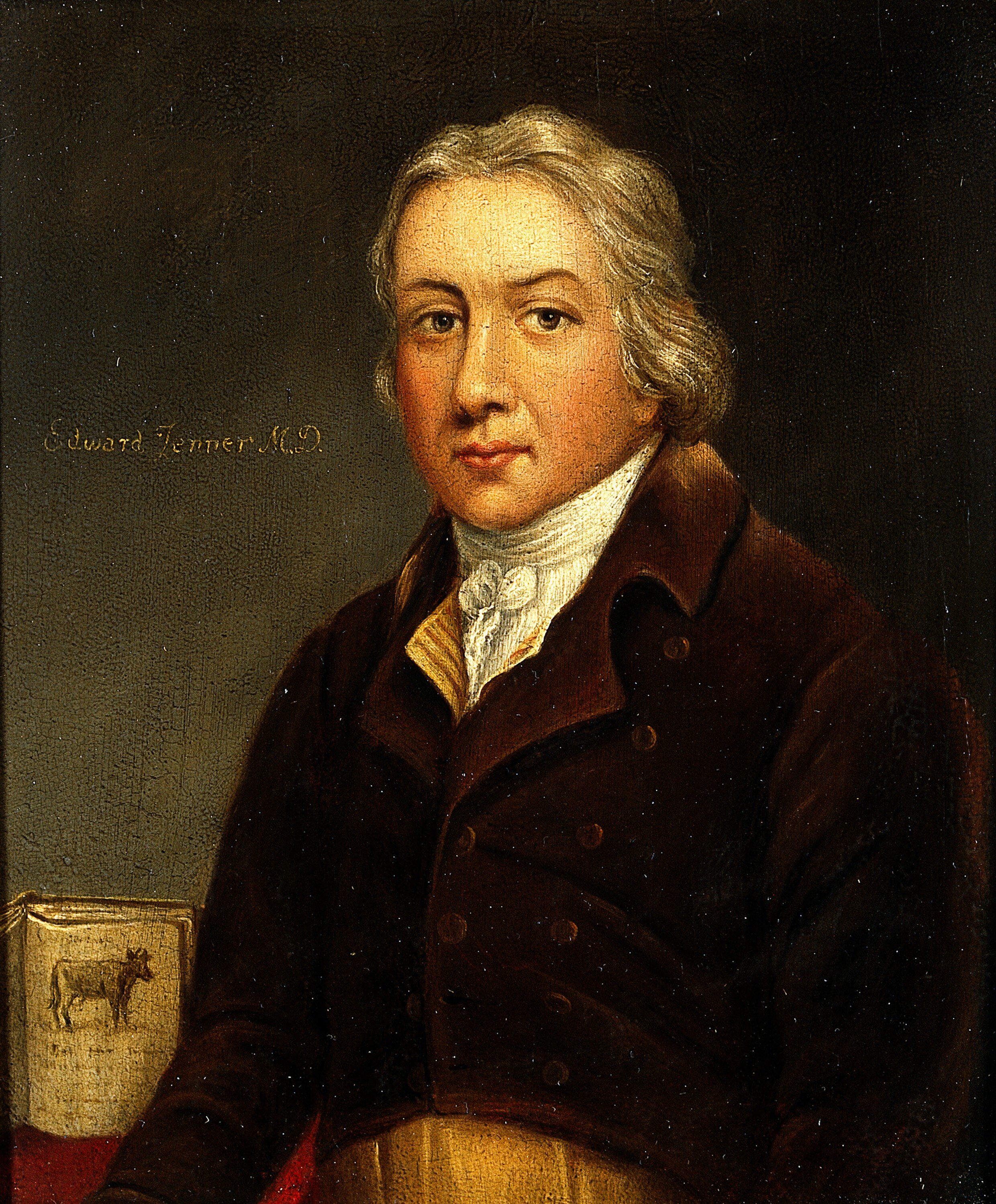
Opposition to vaccination is nothing new, however. Edward Jenner, the father of vaccination, who was a Christian, said to a friend a few days before his death: ‘I am not surprised that men are not grateful to me; but I wonder that they are not grateful to God for the good which He has made me the instrument of conveying to my fellow creatures’. In the words of Johannes Kepler, a key figure in the seventeenth-century scientific revolution, science is about thinking God’s thoughts after him. As someone has put it: ‘The science of medicine (and other technologies) is about approaching a universe of pain, knowing that it is pregnant with possible remedies placed there by our kind and gracious God’.

Edward_Jenner._Oil_painting._Wellcome_V0023503.jpg

While there is an eccentric streak in some streams of Christianity that want to deny pain relief or medical remedies – and simply tell the patient to have more faith – this has, thankfully, always been confined to a small minority. Responsible Christian ministers will warn people against purveyors of false hope – those who prey on the vulnerable, and try and get them to swap proven medical remedies for ‘non-toxic therapies’. One of my fellow pastors in the RP Church of North America has been fighting leukaemia for seven years. He has a PhD in microbiology and taught at university level for 22 years before becoming a minister. He puts it like this: ‘Please, do not deprive yourself of the gift of scientific medicine that God has given us!’ While a lot of people who get cancer will not be successfully treated, and while a time may come when it’s no longer worth fighting, modern medicine has made some cancers highly treatable and highly survivable. As my friend put it: ‘If I had tried to treat myself or if I had opted for an alternative therapy, I would not be here today’.

Gratefully receiving the benefits of modern medicine is not in conflict with relying on God – it’s simply a recognition that while God can heal directly, he usually works through means (like doctors and medicine) to achieve his purposes.

But while we should thank God for vaccines and other medical advances, I worry that many are looking upon them as their salvation. While I understand, and to a large extent share, the desire to get back to normal – are there no lessons that we can learn from 2020? Back in April, a few weeks into lockdown, Matthew Parris wrote an article for The Times entitled: ‘We say everything will change but it won’t’. Talking about claims that Covid would bring about new levels of community spirit, and a greater appreciation of nature, he said: ‘Experience suggests that after much handclapping for the NHS, and unbearable levels of self-righteousness, we will gently slip back into our bad old ways’.

That has proved to be the case. Talk that ‘everything will change’ has been replaced by the question ‘When can we get back to normal?’. And yet in many ways 2020 has been God’s gift to us – we’ve been confronted with our own mortality as never before and been given time to think about where our lives are heading. We might blame 2020 for increased levels of fear, anxiety, bitterness and anger – but what if the events of this year have simply revealed what was already in our hearts?

According to his friend and biographer, Edward Jenner was ‘grateful to God for the signal mercies which He had given to man through him’. However for Jenner, although vaccination was a great gift, it wasn’t the great hope for mankind. In his own words, that could only be found in ‘The Sacred Scriptures’ – and the Saviour they are all about – ‘the only pillow on which the soul can find repose and refreshment’.

Published in the Stranraer & Wigtownshire Free Press, 26th November 2020
 

Questions to ask before Communion

This coming Lord’s Day we will celebrate the Lord’s Supper for the first time since the beginning of the coronavirus pandemic. As one pastor puts it:

‘The command to examine oneself before coming to the Lord’s Table is one of the most important things we can do as we seek to rightly participate in this holy meal. I suspect it is also one of hardest things we are called to do. We are busy and often over-committed, and the practice of quiet reflection and self-examination is a lost discipline. What can often help is a series of pointed questions that force us to consider the deeper and more important things of our lives.’

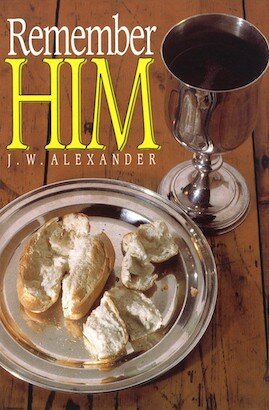
Below are some such questions, originally taken from the book Remember Him by J. W. Alexander (review by Paul Levy here), which may be helpful:

RememberHim-673x1024.jpg
  • “Have I seen myself to be, by nature and by practice, a lost and helpless sinner? Have I seen not only the sinfulness of particular acts and omissions, but that my heart is a seat and fountain of sin, and that in me, as unrenewed, there is no good thing? Has a view of this led me to despair of help from myself, and to see that I must be altogether indebted to Christ for salvation, and to the gracious aid of the Holy Spirit for strength and ability to perform my duty?

  • On what is my hope of acceptance with God founded? On my reformation? On my sorrow for sin? On my prayers? On my tears? On my good works and religious observances? Or on Christ alone, as my all in all? Has Christ ever appeared very precious to me? Have I ever felt great freedom in committing my soul to Him? If I have done this, has it been not only to be delivered from the punishment of sin, but also from the power, pollution, dominion, and very existence of sin within me?”

  • Do I hate all sin, and desire to be delivered from it, without any exception of a favourite lust? Do I pray much to be delivered from sin? Do I strive against it? Do I avoid temptation? Do I, in any measure, obtain the victory over sin? Have I so repented of it, that my soul is really set against it?

  • Have I counted the cost of following Christ, or of being truly religious? Am I ready to be detached from empty pleasures, from the indulgence of my lusts, and from a sinful conformity to the world? Can I face ridicule, contempt, and serious opposition? In the view of these things, am I willing to take up the cross, and to follow Christ wherever he shall lead me? Is it my solemn purpose, in reliance on his gracious aid, to cleave to him and to his cause and people, to the end of life?

  • Do I love holiness? Do I earnestly desire to be more and more conformed to God and to his holy law, to bear more and more the likeness of my Redeemer? Am I resolved, in God’s strength, to endeavour conscientiously to perform my whole duty, to God, to my neighbour, and to myself?

  • Do I conscientiously offer secret prayer daily? Do I ever experience delight in it? Have I a set time, and place, and order of exercise for performing this duty? Is it my purpose, as the head of a household, to maintain the worship of God in my family? Do I read a portion of the Holy Scriptures every day, and in a devout manner? Do I love the Bible? Do I ever perceive a sweetness in its truths? Do I find them suited to my necessities, and do I at times see a wonderful beauty, excellence, and glory in God’s Word? Do I take it as the ‘man of my counsel’ (Ps. 119:24), and endeavour to have both heart and life conformed to its demands?

  • Have I given myself away to God, solemnly and irrevocably, hoping for acceptance through Christ alone, and taking God in Christ, as the covenant God and satisfying portion of my soul? Does the glory of God appear to me the first, greatest, and best of all objects?

  • Have I such a love for mankind as was unknown to me before? Have I a great desire that the souls of men should be saved, by being brought to the Redeemer? Do I feel a peculiar love to God’s people, because they bear their Saviour’s image? Am I at peace with every fellow Christian? If not, have I made the endeavours to be reconciled? Do I, from the heart forgive all who have wronged me? Do I desire and endeavour to grow in grace and in the knowledge of Christ my Saviour, more and more? Am I willing to sit at his feet as a little child, and to submit my understanding implicitly to his teaching, imploring his Spirit to guide me into all necessary truth, to save me from all fatal errors, to enable me to receive the truth in the love of it, and to transform me more and more into a likeness of himself?

  • Do I love the Lord Jesus Christ? Do I especially love him as dying for my sins? Do I desire to remember him, in this his dying love, at his table? Am I sufficiently acquainted with the nature and design of this sacrament? Have I carefully considered the history of our Lord’s sufferings, in the four Gospels? Have I diligently read the accounts of this institution, in the New Testament? Am I ready, as a sinner redeemed by this blood, to go to this ordinance? Am I desirous of communion in it with Christ’s people? Am I willing to submit myself to the government and discipline of the Church? Do I feel it to be important to adorn Christian profession by a holy, exemplary, amiable, and blameless walk? Do I fear to bring a reproach on the cause of Christ? Am I afraid of backsliding, and of being left to return to a state of carelessness and indifference in religion? Have I any sufficient reason for withholding the profession of my faith? And what is my duty, in consideration of the possibility that I may be summoned into eternity before another communion service?