
Update: On 9th January, a report came a report came out highlighting how Bible sales have also surged in the UK, with sales up 106% in volume from 2019, including a 28% increase between 2025 and 2025.
2025 has been an interesting year.
In January, the world’s most popular podcast – the Joe Rogan Experience – featured an interview with Christian apologist Wes Huff. In February, Larry Sanger, the co-founder of Wikipedia, announced that he had become a Christian.
In September, the world’s second-most popular podcast, Diary of a CEO, had an episode entitled: ‘Is Not Believing In God Causing More Harm Than Good?!’
As I mentioned in a previous column, the host, Steven Bartlett gives the example of a 35-year-old friend in Dubai. Six months ago, he told his friends that he couldn't get out of bed anymore. Fast forward to today and he’s become a Christian, got baptised and ‘suddenly his life has purpose and meaning again — he's a completely different person’. This is despite, Bartlett says, him being the last person you would ever think would be religious.
Bartlett himself went through what he calls a ‘new atheist baptism’ at the age of 18. ‘But now’, he says ‘I find myself in a position where I'm almost back to being curious again’.
Bartlett echoes what many are feeling. People are detecting a ‘vibe shift’. As he himself puts it: ‘there is something going on’.
One of the metrics that would seem to back this up is Bible sales. A year ago, the Wall Street Journal reported: ‘Sales of Bibles are booming, fuelled by first time buyers’. The article that followed reported on a 22% rise in Bible sales.Then in September of this year, there was a 36% jump compared to the year before.
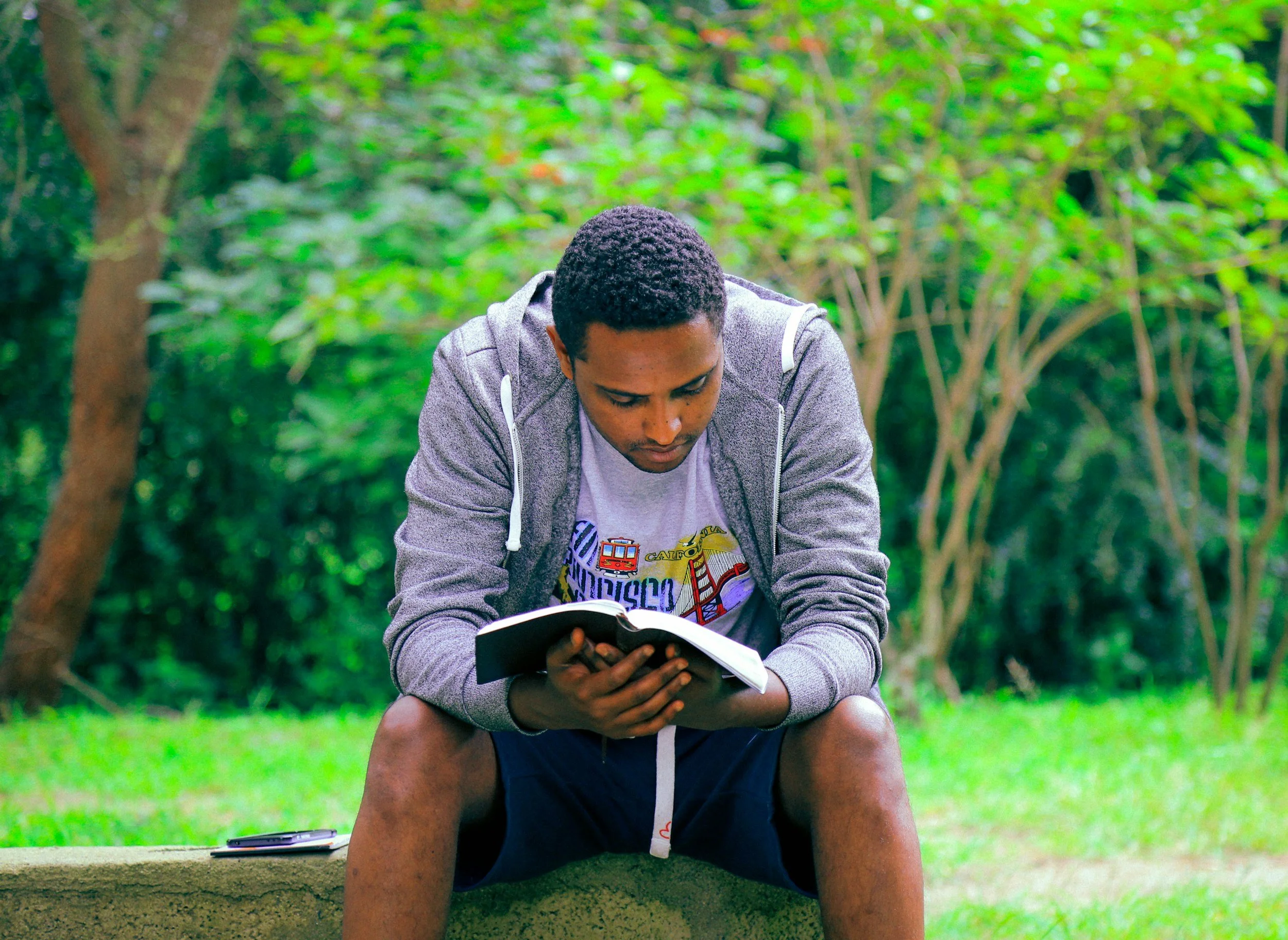
Another trend this year has been people posting on social media that they’re about to read the Bible for the first time, and asking where they should start.
Most people would recommend starting to read the Bible in one of the gospels – the first four books of the New Testament. And if someone were to start with either Matthew’s or Luke’s account of Jesus’ life, they would begin with what has become known as the Christmas story – the birth of Jesus.
And on this Christmas Eve, I want to highlight two things about the Christmas story.
The first thing is that it didn’t come out of the blue.
In other words, it was expected. Many of the details had been prophesied 700 or more years before. The fact that Jesus would be born of a virgin, even the name of the town in which he’d be born. In the last week or so, the ever-thought provoking Glen Scrivener tracked down and interviewed Steven Bartlett’s friend, who had gone from not being able to get out of bed to becoming a Christian. In the interview, the friend reveals that he’d actually started looking into Christianity to try and disprove it – because he realised that as an atheist, he had rejected it, but he knew nothing about it.
But one of the things that convinced him of Christianity were all the connections between the Old Testament – the first half of the Bible – and Jesus. This is despite the fact that the Old Testament was written hundreds and even thousands of years before Jesus came. The Christmas story happened exactly as God had said it would, which is powerful evidence for the truth of it.
The second thing I want to highlight about the Christmas story is to do with the visits of the angels. Angel appearances aren’t particularly common in the Bible, but they’re all over the Christmas story. An angel appears to John the Baptist’s father, then to Mary, then to Joseph, then to some shepherds in a field watching their flocks by night. Yet almost every time an angel appears, before it can give the message that it’s been sent by God to give, it has to begin by saying ‘Don’t be afraid’. Because people are terrified.
But the news they have for us is good news, and so they start: ‘Do not be afraid’.
It reminds me of the last words of the Irish poet Seamus Heaney. A couple of minutes before he died, Heaney texted two words to his wife: ‘Noli timere’ – Latin for ‘do not be afraid’.
I’m sure that was a great help to her. But how much better it would be to hear those words from beyond the grave. From someone who had died and come back, and was able to tell us ‘Do not be afraid’.
Well in short that’s the Christmas story.
That’s the Bible’s message.
That’s what’s on offer.
And at the end of a year in which many have turned back to God – it’s at least worth investigating.
Published in the Stranraer & Wigtownshire Free Press, 24th December 2025.