Christ’s Wake-Up Call to the Church

As part of our series on the letters to the seven churches of Revelation, we’re coming this Lord’s Day morning to Jesus’ letter to the church in Ephesus. Here are a couple of resources on the passage, as well as the seven letters more generally.

Love or Die: Christ’s Wake-Up Call to the Church

Love or Die is a whole book devoted to Revelation 2:1-7 by Alexander Strauch. Respected Christian book reviewer Tim Challies says:

“I can think of few books I’ve read recently that have had so immediate an impact on me and have given me so much to think about. I trust, that with God’s help, the implications of this book will be with me always”.

Outside In

This is a 4-part Bible Study course by Reformation Scotland, available free on their website, based around some of the insights of the Scottish Covenanter James Durham. You can watch part 1 below:

The Seven Churches of Asia

This little booklet, based on addresses given by Robert Murray M’Cheyne is available free on Google books.

How to read Revelation

poythressking_shrink.png

Stephen recently began preaching on the first 3 chapters of the book of Revelation. These chapters contain an introduction, a vision of the Lord Jesus, and letters written by him to seven churches.

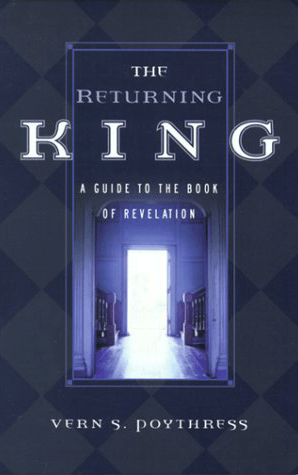
There are a number of helpful resources online dealing with both Revelation in general and the seven letters in particular. One very readable commentary on Revelation, which is available to read free online is The Returning King by Vern Poythress (Westminster Theological Seminary). He also has a free study guide with questions on each section.

He gives the following guidance on how to read the book of Revelation:

• Read it prayerfully. Jesus Christ is the source of this Book (Rev. 1:1). He alone can give you spiritual eyes and hearts to understand it. Pray to the Lord that he would interpret this book to your heart.

• Focus on the central theme. Read Revelation to see what it says about God ruling history and bringing it to consummation in Christ. Read for the big picture. Don’t be discouraged when you do not understand some detail. Most people who get into difficulty fail right here. They want to understand the details and to predict future historical pinpricks before they have even begun to absorb the central message. They are doing things the wrong way around. Nobody can properly understand the details of a book without first understanding the main points.

• Be God-centred. Otherwise, you will be like someone who takes holds of a knife by the blade instead of the handle. Or you will be like someone who tries to understand a beautiful painting by looking in a magnifying glass at each blob of paint on the canvas.

• Focus on the hope for the coming of Christ. Watch how the whole book points forward to Christ’s return.

• Let the images “soak into you.” Get involved in the Book. Don’t try to puzzle it out. Enjoy it. Cheer for the saints. Detest the beast. Rejoice in God’s power and glory. Praise the Lamb.

• Pay attention to Old Testament themes and images that are used in a fresh way. The book of Revelation has many allusions to Daniel, Ezekiel, Zechariah, and the breadth of the Old Testament. Becoming familiar with the Old Testament will help you deepen your appreciation of Revelation, even though the basic message of Revelation comes through to all the servants of Christ.

• Recognise that the central part of the book is a prophetic vision given by God to John. Prophetic visions are full of symbols. They are symbolic representations of spiritual truth, not photographic copies of events.

• Use this book in times of distress, persecution, and death. Christians of all ages testify that it speaks powerfully to people in deep trouble.

Morning worship outside

IMG_3348 2.jpeg

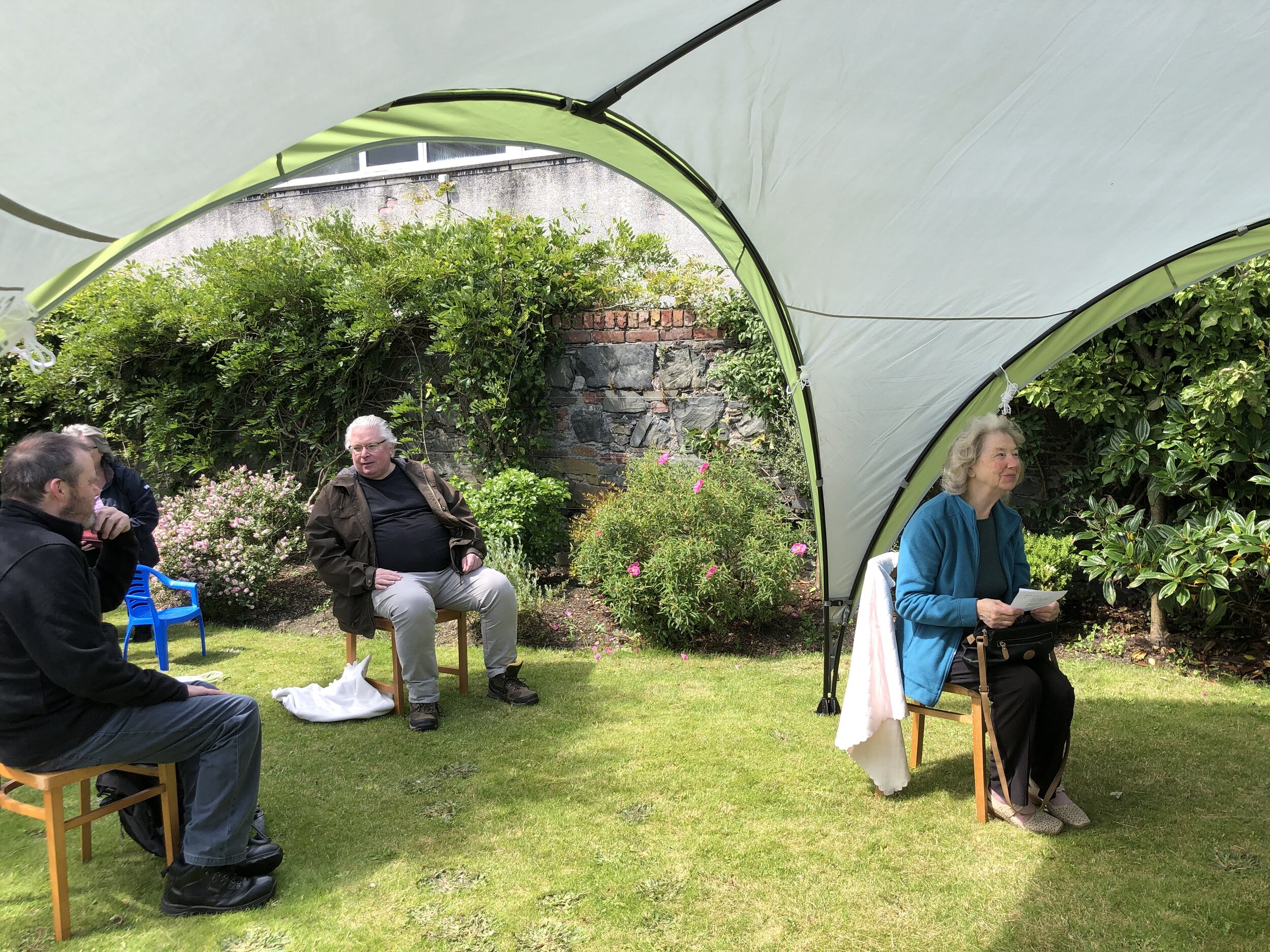
For at least the next two Lord’s day mornings (9th and 16th Aug) we will be worshipping outside (at the Frasers’ home - contact us for address info) in order to follow the command to ‘Come into his presence with singing’ (Psalm 100:2) while remaining within government guidelines for churches.

The services will be at the usual time of 11:30am, and if the weather is particularly bad we will revert to the church building. Evening services will continue to be held in the building at 5:30pm. All welcome.

Dignity but no life!

Last Lord’s Day evening, Stephen preached on 2 Samuel 6:12-23 under the theme ‘Dignity but no life’. For a sermon on the same passage which particularly applies it to the church in Scotland today, as well as the history of the RPCS in the twentieth century, we highly recommend this sermon preached in the Airdrie congregation by Carla’s father, Rev. Andrew Quigley, in 2011:

You can listen to the audio of the above sermon here.

For some more background on the transformation that the Airdrie congregation saw - and that by God’s grace we are working to see in Stranraer - see this article: Can a church turn around?

Why Evening Worship?

From this coming Lord’s Day we will be bringing our evening service time forward an hour to the new time of 5:30pm. This was agreed in March, after consultation with the congregation, but we have been unable to implement it till now as Public Worship had been cancelled due to the coronavirus pandemic.

As stated at the time:

Why_go_to_church_twice_on_Sundays_cover_1024x1024.jpg

Given our conviction that God is ‘worthy to be praised’ (Psalm 18:3), that public worship is to be preferred before private (Psalm 87:1), that ‘it is good…to declare your steadfast love in the morning, and your faithfulness by night’ (Psalm 92:2 – ‘A song for the Sabbath’) and that the whole of the Lord’s Day is to be kept holy (Exodus 20:8; Revelation 1:9), as well as the fact that the risen Lord Jesus is present in a special way when his word is preached (Romans 10:14; Ephesians 2:17; 2 Corinthians 5:20; 1 Thessalonians 2:13), that he repeatedly appeared to his disciples on the evening of the first day of the week (Luke 24:28-29; John 20:19, 26), and following the example of the early Christians who met on Lord’s Day evenings (Acts 20:7), we want to hold our Sunday services at times that everyone can attend, from the youngest through to the oldest.

In a day when many base the worship of God around their busy lives, we urge people to do the opposite - to base their lives around the worship of God.

Some helpful resources on the question of ‘Why evening worship?’ are below:

“When you come into a half-empty sanctuary on a rainy Sunday evening, be encouraged! The gathering may look small and insignificant; in reality, it’s filled with those who sinlessly and ceaselessly worship God before his face.” - Megan Hill

Updated with articles from 2020:

2021 updates: