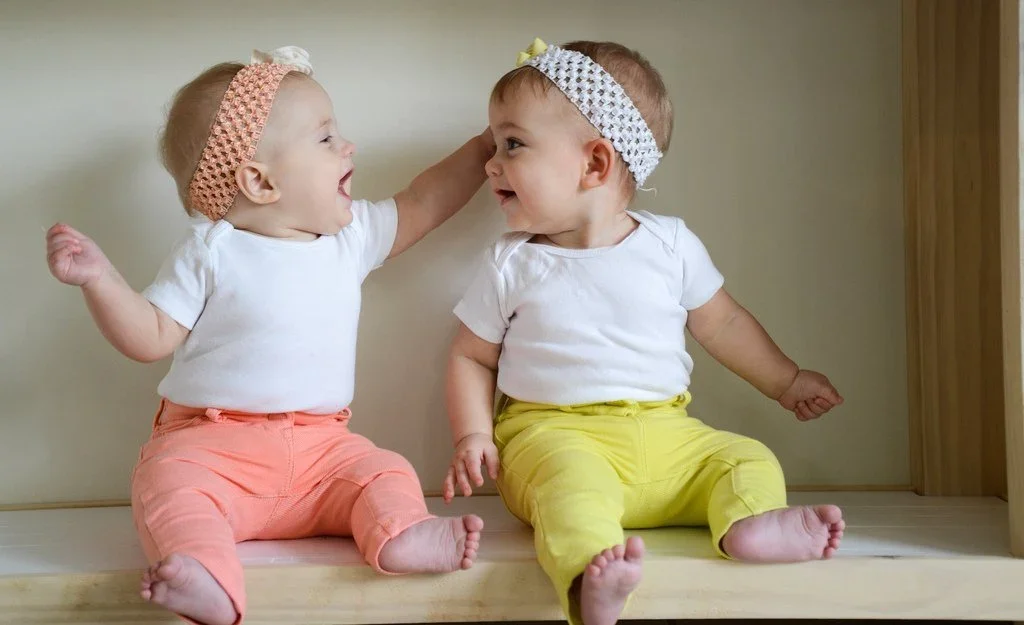
Each summer, the most popular baby names for the previous year are revealed. In Scotland, Freya replaced Olivia as the top name for girls, with Noah holding on to the number 1 slot for boys. In England, Olivia was the most popular name for girls for the tenth year in a row, with Muhammad the most popular boys' name for the third successive year.
As Clare Green, an expert who writes for baby-naming website Nameberry, explained to the BBC, "Names can build momentum - the more people give their child a name, the more other parents hear it and like the sound of it, so it snowballs."
You'll know this if you have a child at school. There might be 25 people in their class, but there won't be 25 different names. Or I think of the people I've played football with on Friday nights over the years — even if it's only 5-a-side there can be multiple Iains, Alans, Davids, etc. My friend Josiah played for the first time last week and it was clearly a name people weren't using to shouting in the middle of a match!
And in fact, one of the quiet indications that the Bible is accurately reporting real events is its use of names.
For a start, the Bible has lots of people with the same names! Works of fiction generally don't. But in the New Testament there are 8 Simons, 6 or 7 Marys, 6 Josephs, 6 Judases, etc. Having some baby names be more popular than others is nothing new — and this is reflected in the New Testament documents.
But more than that, the most popular names in the New Testament were also the most popular names in Palestine at the time. The top 7 most popular Jewish names in Palestine at the time were Simon, Joseph, Lazarus, Judas, John, Jesus, and Ananias. These also just happen to all be some of the most popular names in the New Testament. Why does that matter? Because if someone living elsewhere had been making up the contents of the gospels, they wouldn't have been able to come up with authentic character names. Even in Jewish communities elsewhere, like in Egypt, the most popular names were very different. Lazarus and Joseph were popular names in both places — but the 2nd most popular name in Egpyt, Sabbataius, was only number 68 in Palestine. Pappus and Ptolemaius were #4 and #6 among Jews in Egypt, but only #39 and #50 in Palestine. In other words, a Jew writing in Egypt couldn't have come up with either the right names, or the right distribution of those names. Even someone making up the gospels in Palestine would be unlikely to make the most popular names in society the most popular names in their book. If the book was long enough, they might contain two characters with the same names, but unlikely 6 or 7!
Furthermore, when the gospels use the most popular names, a qualifier or nickname is often used. When Matthew lists the 12 disciples, the most popular names come with nicknames/clarifications: Simon called Peter, James the son of Zebedee, John his brother, Matthew the tax collector, James the son of Alphaeus, Simon the zealot, and Judas Iscariot who also betrayed him. Those names are all in the top 11. But the other names of the disciples are much less popular, and so don't need nicknames: Thaddeus (#39), Bartholomew (#50), Philip (#61), along with Thomas (outside the top 100). So even if someone living in Palestine was making up the gospels, and even if they got the right proportion of most popular names, they would still have to remember to reflect that in ordinary conversation. At some point it's just easier to believe that the gospels were written at the time and in the place they claim to be written.
Now someone might say: "Ok fine, the names of the people are accurate, but the miracles and so on are made up". The accusation is often made that the events recorded in the gospels have become garbled over the years, like in the game that the Americans call the Telephone Game, known over here as Chinese Whispers.
There are many problems with that analogy; for a start, the whole game is set up to try and confuse the message. But it also just doesn't fit the evidence. In one sense, the truth of the gospels doesn't depend on the names being accurate. They're incidental. But if even the names of the people involved have been accurately passed down over these past 2,000 years — does it not give us confidence that the most important events have also been passed on accurately too?
Published in the Stranraer & Wigtownshire Free Press, 6th August 2026