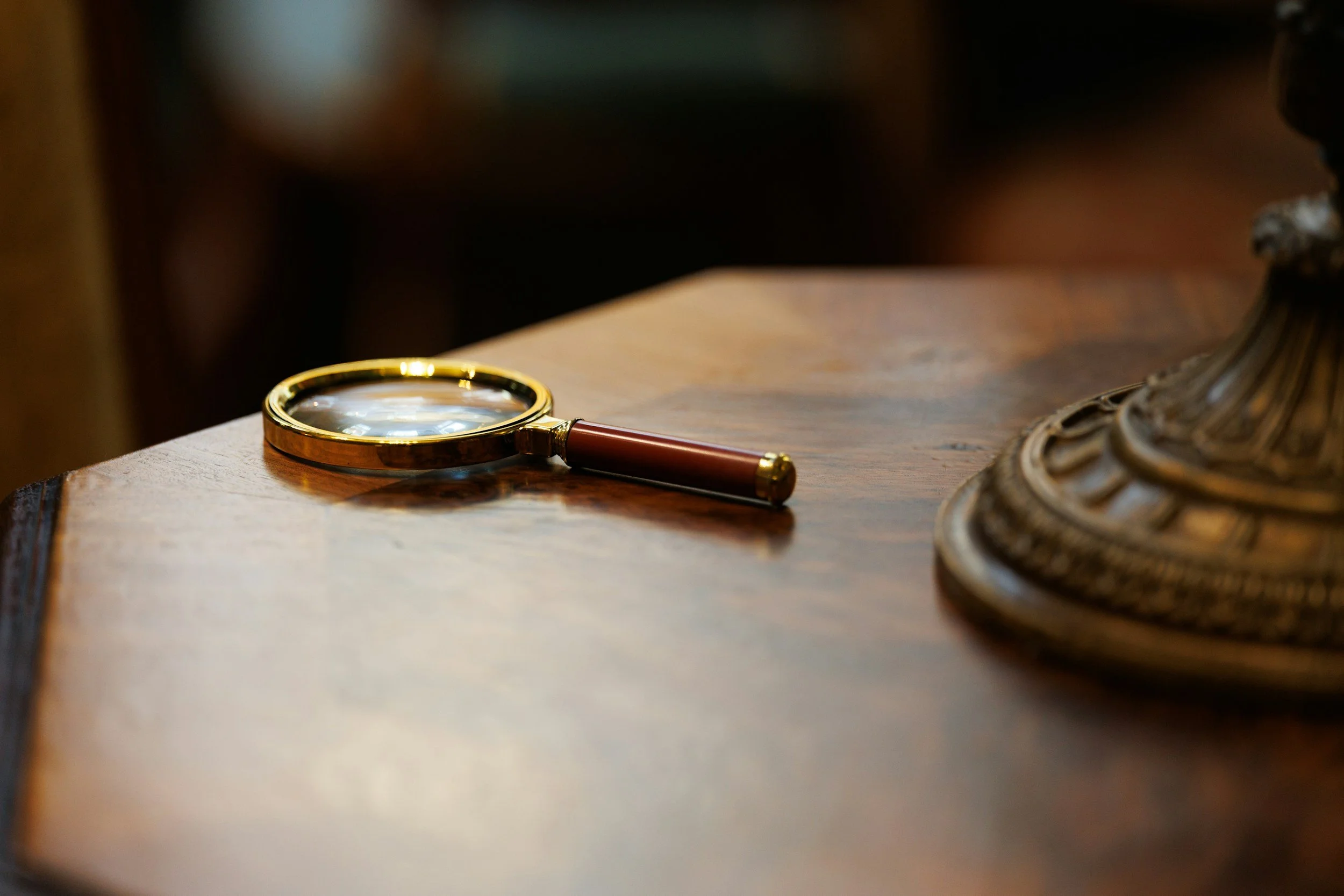
Every so often, I'll go on a bit of an audiobook kick. At the moment, I'm listening to the Sherlock Holmes Definitive Collection, narrated by Stephen Fry. I'm not sure I'll manage to listen to all 72 hours, but for now I'm enjoying some of Arthur Conan Doyle's short stories about the world's most famous fictional detective.
One part that made me sit up and take notice while falling asleep one night was the conclusion to The Adventure of the Cardboard Box. (It's more exciting than it sounds — the cardboard box in question contains two severed ears). After the solving of a double murder, the story concludes with a profound question.
'"What is the meaning of it, Watson?" said Holmes solemnly as he laid down the paper. "What object is served by this circle of misery and violence and fear? It must tend to some end, or else our universe is ruled by chance, which is unthinkable. But what end?
For Holmes, there are two possibilities. Either our world has a purpose and things happen for a reason — or the universe is ruled by chance. The latter is unthinkable.
I've given a similar answer when I've been asked why I believe that God exists (as I often am during lunchtime slots in Stranraer Academy). One part of my answer is that, if there's no God, it's all meaningless. And yet as human beings we naturally look for meaning and purpose — and have a clear sense of right and wrong — which all fits with the Bible's explanation that we are made in God's image. We think in terms of right and wrong because God is a moral being. And we look for meaning and purpose, because God has a purpose in all that he does.
Indeed, Holmes believes in more than Intelligent Design, or even simply a Creator — he believes in a good God. In The Naval Treaty he says:
'"Our highest assurance of the goodness of Providence [ie God] seems to me to rest in the flowers"'.
His reasoning was that everything else is necessary for existence:
'"But this rose is an extra. Its smell and its colour are an embellishment of life, not a condition of it. It is only goodness which gives extras, and so I say again that we have much to hope from the flowers.'"
In other words, the fact that we have flowers shows that God is good. He didn't need to make them for our survival. He could have made the world black and white. The fact that instead it's overflowing with colours and smells and good things to eat points to the existence of a good and generous God.
That doesn't mean we always know the reason God does things. Just because we believe in a good God who does all things for a purpose, doesn't mean we know what that purpose is. Hence Holmes asks: "But what end?"
We can answer his question in general terms. But when confronted with tragedy, we don't need to pretend to know all the reasons. It's enough to know that God is in control, and that he is good.
But one day we will know. Holmes also believed in a day of judgement, when everyone would stand before their Creator. In The Boscombe Valley Mystery he tells a dying man who has just committed murder: '"You are yourself aware that you will soon have to answer for your deed at a higher court than the Assizes"'
A day of reckoning awaits. But Holmes also believes in salvation. In The Adventure of the Blue Carbuncle he says: '"I suppose that I am commuting a felony, but it is just possible that I am saving a soul'".
And if people are saved, ultimately it's God that does it. As the detective comments at one point: "There, but for the grace of God, goes Sherlock Holmes".
Until Judgement Day, we wait. And we trust. Indeed a passage in The Adventure of the Veiled Lodger is particularly relevant to the so-called "Assisted Dying" debate. Holmes successful persuades a disfigured woman not to end her own life:
"Your life is not your own," he said. "Keep your hands off it."
She responds, as many still do: "What use is it to anyone?"
Holmes replies: "How can you tell? The example of patient suffering is in itself the most precious of all lessons to an impatient world."
That, then, is the theology of Sherlock Holmes. We don't always know what God is doing, but he's good and he's in control. The alternative is unthinkable. But belief in a good God isn't just wishful thinking, because he's provided evidence of his goodness in Creation. There is a day of judgement coming, ahead of which souls will either be lost or saved. And until then, we keep going, never forgetting that life itself is a gift.
As usual, it’s obvious once Holmes points it out!
Published in the Stranraer & Wigtownshire Free Press, 10th September 2026