Kanye West: a modern-day Covenanter?

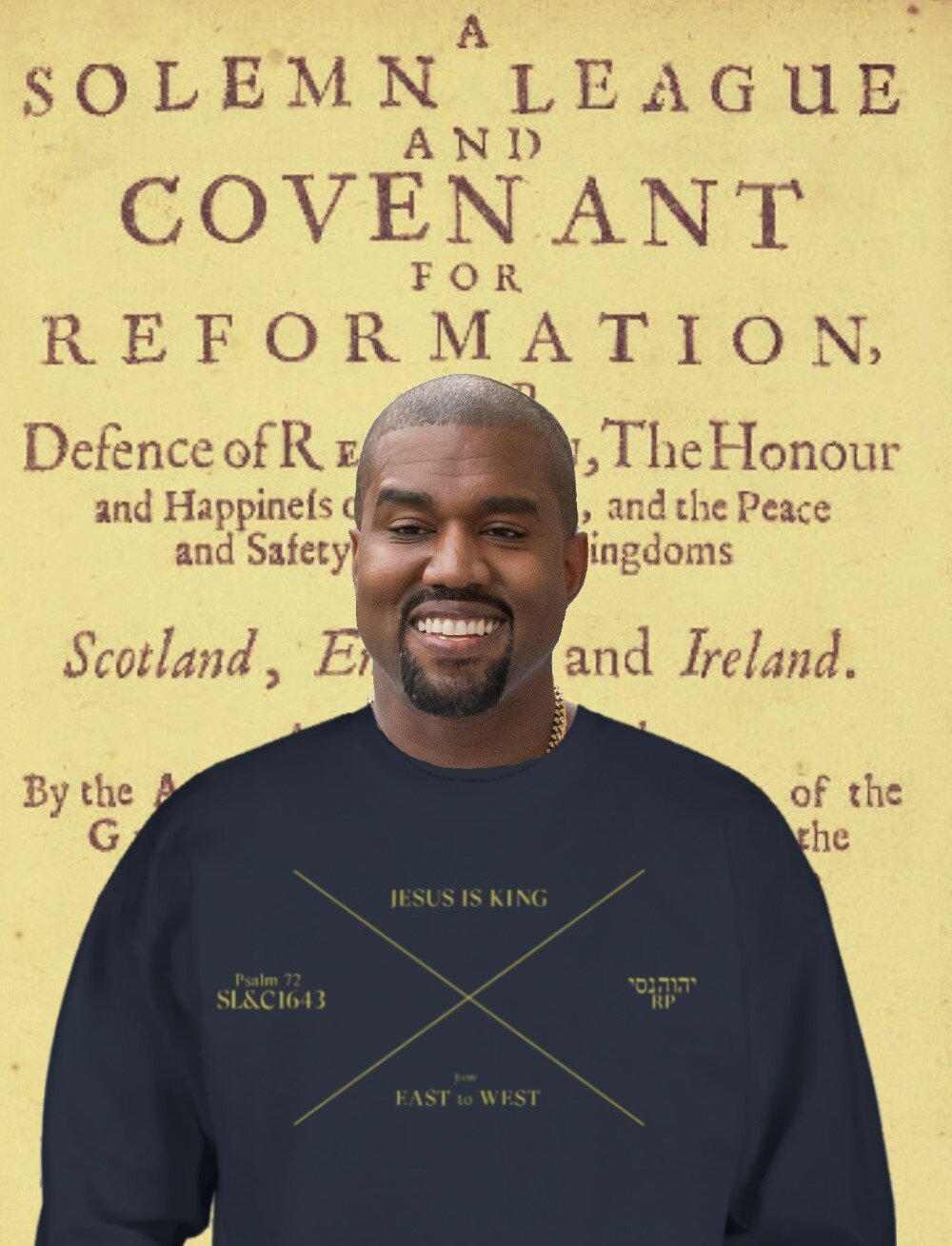
It’s not every day that Times Square in New York is lit up with huge advertisements proclaiming ‘Jesus is King’. It has been recently however following the release of the new album with that title by Kanye West. If you’re not familiar with him, the 42-year-old is one of the best-selling music artists of all time. He’s also well-known for his marriage to reality TV star Kim Kardashian. What he’s not known for are album titles that sound like the sort of thing the Covenanters of South-West Scotland once emblazoned on their banners.
Kanye has moved from ‘I am a God’ to ‘Jesus is King’

Kanye has moved from ‘I am a God’ to ‘Jesus is King’

In 2006, Kanye was accused of blasphemy after he appeared on the front cover of Rolling Stone wearing a crown of thorns, with the headline ‘The Passion of Kanye West’. His 2013 album ‘Yeezus’ played on the name Jesus and included a track entitled ‘I am a God’. Now his life appears to be heading in a completely different direction. According to his wife, he’s been ‘born again and saved by Christ’. His concerts have become weekly ‘Sunday services’, featuring a short sermon delivered by a previously unknown Reformed pastor, Adam Tyson.

West has been very open about his newfound faith in a number of interviews, including one with James Corden, which is currently trending on YouTube with 11 million views in less than a week. Kanye tells Corden that the new night-time routine in the West household is Kim watching Dateline (an American news show) and him reading the Bible. Corden responds: ‘Seriously?’. Corden also speaks for many who will be sceptical about the change, asking ‘What do you say to people who will say I don’t believe it?’ ‘That you would one day be living your life in a certain way and now saying that everything is for [God]?’ Kanye responds by describing it as the difference between being asleep and awake.

Yet although he has experienced a radical transformation, it also seems to be something Kanye has long been searching for, even if he didn’t realise it. In his 2004 single ‘Jesus walks’ he prays ‘God show me the way because the Devil’s tryna break me down’. He says ‘I wanna talk to God but I’m afraid ‘cause we ain’t spoke in so long’. Now, looking back, he says ‘I didn’t know what it was to be saved’, adding ‘people want something but there isn’t anyone telling them how to do it’.

Unsurprisingly, Kanye’s transformation has met with mixed reactions – and not just from those who don’t share his new mission to ‘turn atheists into believers’. Many, both Christians and non-Christians, wonder whether it’s all just a stunt. Others wonder whether it will last. He wouldn’t be the first artist to go through a temporary ‘born again’ period – many will remember Bob Dylan’s 3-year Christian phase when he too began to preach at concerts. Kanye anticipates such reservations, singing on the new album that Christians will be ‘the first ones to judge me’. ‘To sing of change, you think I’m joking / to praise His name, you ask what I’m smoking’.

While only time will tell if his conversion is the real deal, there are reasons to be optimistic. Kanye seems different from the many celebrities who merely pay lip-service to God. He seems to have a clear understanding of what conversion, saying ‘the road to hell is paved with “Oh, I’m just a good person”’. In an interview with former Radio 1 DJ Zane Lowe he says that whether people will get into heaven or not depends on whether they have accepted Jesus. He has spoken a number of times about the need for ‘radical obedience’. Kanye is also remarkably clear-sighted about his previous life, saying: ‘I thought I was the God of culture, but culture was my God’. ‘I worshipped the idea of labels, brand names, I worshipped cars’. Now he says ‘nothing beats God’. Nor does he present himself as the finished article; he talks candidly with Lowe about his ongoing struggles with pornography addiction, even as a Christian. In Tyson, Kanye also has the counsel of a solid pastor.

Whatever way it all pans out, it’s certainly refreshing to see the phrase ‘Jesus is King’ trending on social media, and to hear a celebrity like Kanye talking about the change God has brought about in his life. Long-term fans may be disappointed. Many reviewers have slated the new album, with Time Magazine complaining it’s ‘weighed down by its lack of demons’. But for those tired of battling their demons that might sound like no bad thing.

Published in the Stranraer & Wigtownshire Free Press, 14th November 2019

Job loss can't take away your dignity or valu

Border Cars lies empty

Border Cars lies empty

It has been a horrendous couple of months for job losses in Stranraer. Over thirty jobs were lost when Border Cars went into administration in July and the following month Brambles Tea Room and Jumping Jacks Soft Play closed. Since then Thomas Cook and William Hill have gone the same way, with a number of job losses at Tesco as well. That would be a heavy blow for a town double the size of Stranraer. Almost all of us will know someone affected – and many of us will also know of others who have lost their jobs recently, even if their plight didn’t make the headlines. The inconvenience we may have experienced of having holidays cancelled or having less places to take an energetic toddler pale into insignificance compared to the heartbreak of those who have lost their only source of income, while all their expenses stay the same.

Gone are the days when people started a job in their mid-teens and were there until they retired. In a world of increasing uncertainty, job security is something that fewer and fewer people can take for granted. In fact, even the original Thomas Cook himself saw his fledgling travel business collapse back in 1848, only to recover a few years later.

619x825.jpg

As well as the heartache, there has also been anger at how some of the job losses have come about, not least with the news that the former boss of Thomas Cook received a £750,000 bonus in 2017.

It all seems a far cry from the man who founded the company in the mid-1800s. According to one modern biography, Thomas Cook got a taste for travel as a village missionary. He would travel round villages preaching, distributing tracts and setting up Sunday schools. We’re told that his faith ‘gave him a strong desire to help the downtrodden’, and much of the company’s profits were given to relief of the poor and charitable work. Cook was also involved in the growing temperance movement, after becoming convinced that cheap alcohol exacerbated the ‘poverty, crime, strife and wretchedness’ of the people.

Cook’s approach brought him into conflict with his son John who ‘believed that business should be kept separate from religion and philanthropy’. However the different approaches of father and son complemented each other. John was certainly more concerned with the bottom line, leaving the company with 84 offices and 2692 staff (almost 1000 of them in Egypt). Yet both father and son were interested in world travel for reasons other than just profits. By organising the first tour party ever to go around the world, Cook hoped to ‘pioneer the way for the golden age when nations shall learn war no more’ (a reference to Isaiah 2:4). John likewise believed ‘that the world would be a pleasanter place of habitation if all the dwellers on its surface were brought closer together, and that international travel was one of the best preservatives against international wars’.

While their vision may seem idealistic, it was an attempt to view their work as part of the bigger picture. That’s certainly an important emphasis to try and retain today – both for employers and employees. As a pastor, part of my role includes counselling people who have recently lost their jobs, have been out of work long-term – or whose problems are more in the area of overwork. Since work forms such a big part of many of our lives, it’s no surprise that the Bible has plenty to say about it. And as with many things, we could sum up its teaching by saying that work is a good thing, but not a God thing. In other words, work isn’t the necessary evil that it’s often thought of – but neither should it have the number one place in our lives, where our families or our souls are sacrificed on the idol of our careers.

Whether we are currently employed or not, it’s important for us to remember that our work doesn’t define us. The Bible defines us all as people made in the image of God. The big danger of placing our identity in work or family or anything that can be taken away from you is that once it’s gone, our identity has been so tied up with it that we don’t know who we are anymore. Rather, we have a dignity and value that can’t be taken away from us, no matter what outward changes take place in our lives. If you have work, be thankful for it, but beware of defining yourself (or anyone else) by what you do.

Published in the Stranraer & Wigtownshire Free Press, 24th October 2019

Global Day of Prayer for RP Ministers

Synod_2019-144.jpg

The Reformed Presbyterian Churches of North America, Ireland, Scotland and Australia have agreed to appoint the Lord’s Day, 6th October 2019 as a day for united prayer in all our congregations that God would raise up men to serve as pastors and missionaries. This is a keenly felt need in each of our denominations and it is a wonderful expression of our unity in the Gospel that we can join with one another in a day of prayer that will span the globe.

The RP Global Alliance have produced prayer points which highlight the number of churches currently without pastors in each country, along with the number of men currently being trained for ministry in each place. These numbers include the Japanese Presbytery, which is currently under the oversight of the RPCNA. You can read the prayer points here or download a PDF version here. Prayer points are also available in French and Spanish.

Ministers' Conference 2019

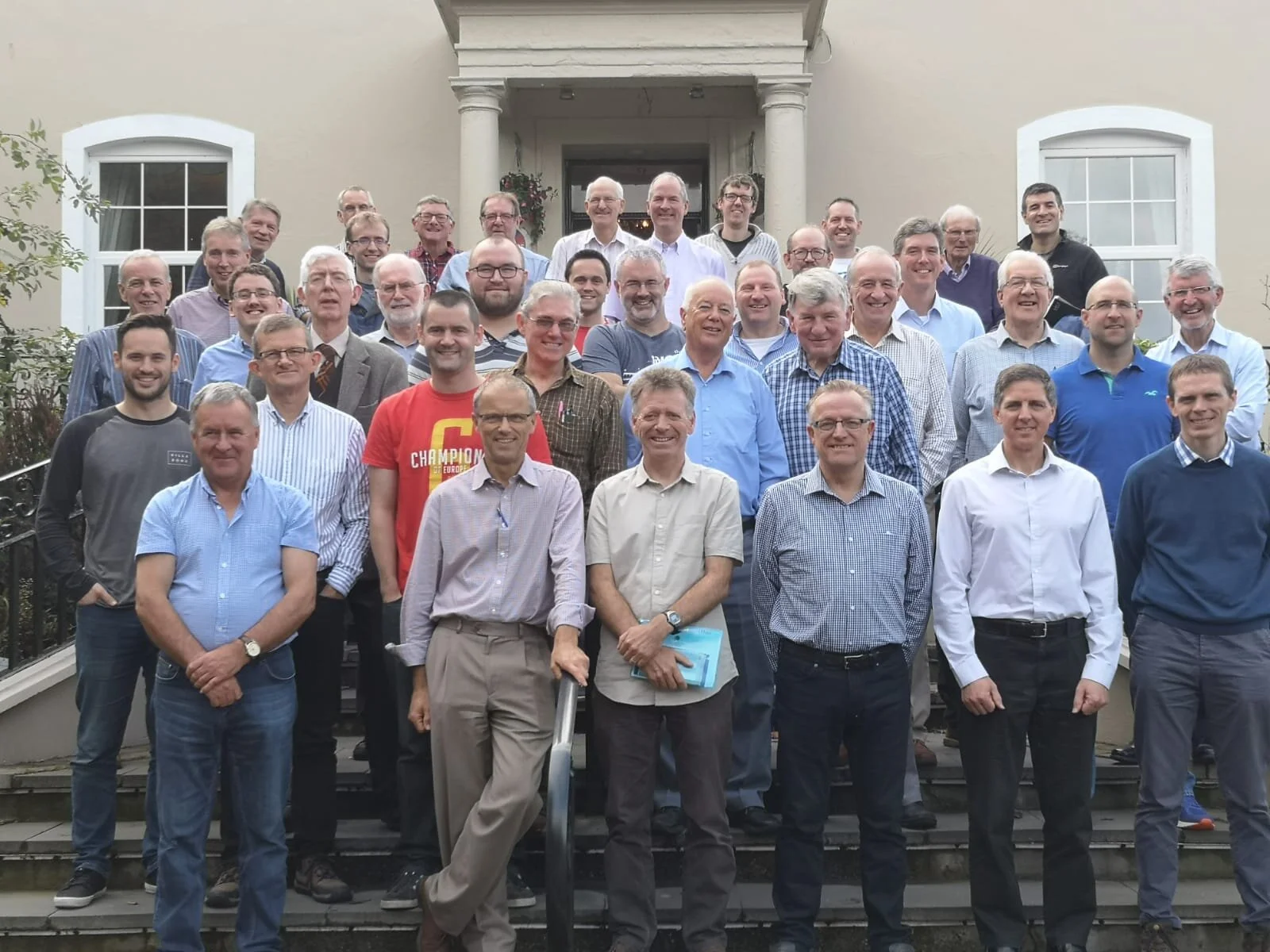
Last week, Stephen attended the annual Irish/Scottish RP Ministers’ Conference with around 40 other men.

WhatsApp Image 2019-09-25 at 21.47.36.jpeg

As part of the conference, Stephen gave a talk entitled ‘William Symington on the Christian ministry’ - August had marked 200 years since Symington’s ordination in Stranraer. Much of the talk was drawn from charges Symington delivered to James M’Gill, a farmer’s son from Portpatrick, when he was ordained as minister in Hightae, near Dumfries, in 1829.

Screenshot 2019-09-24 16.00.50.png

You can read more about the conference on the RP Global Alliance website.

Poppy's Baptism

IMG_7556.jpeg

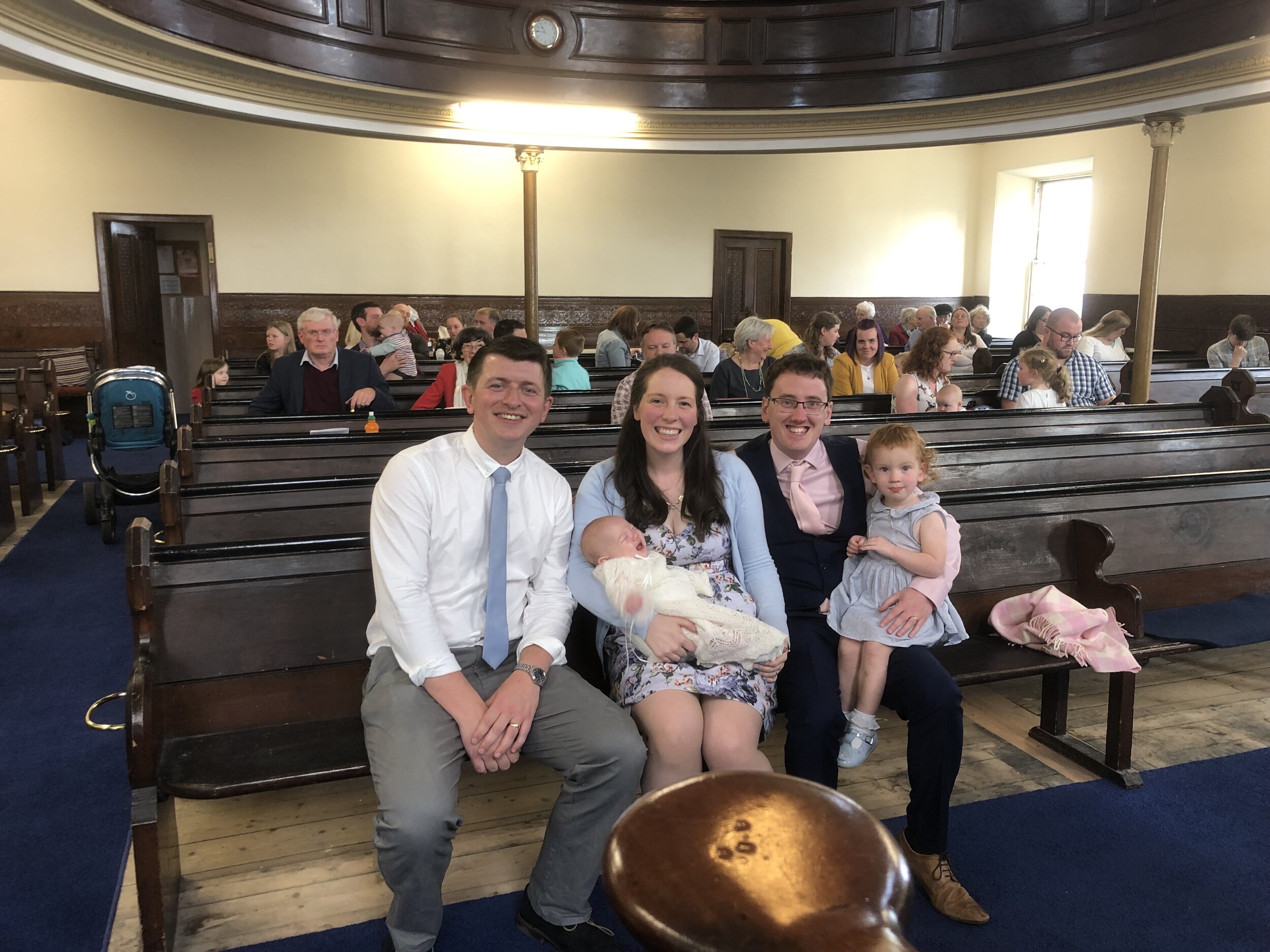
On Saturday 21st September, the congregation were joined by family and friends of Stephen and Carla for Poppy’s baptism. Rev. Robert McCollum (Newtownards RPC) conducted the service and baptised Poppy. He preached on the subject ‘Have you considered my servant Job?’, bringing a challenge to parents and pointing us all to Jesus. You can listen to the sermon here.

IMG_7527.jpeg

The service was live streamed for the benefit of family in Canada, and you can watch it below:

IMG_7585.jpeg
IMG_7588.jpeg
IMG_7608.jpeg