Rev. Gerald Milligan - 40 years in Stranraer!

IMG_0607.JPG

Forty years ago today, Rev. Gerald Milligan was inducted as minister in Stranraer, after six years of ministry in Milford, Co. Donegal. He came to Stranraer two years after the retirement of Rev. Moffett Blair.

IMG_0609.JPG
IMG_0610.JPG
IMG_0611.JPG
IMG_0612.JPG

Although Gerald retired in 2010, he stayed on as stated supply until the ordination of Rev. Stephen Steele in 2015, and since then has served as an elder in the congregation.

Below are some photos from when the Presbytery marked Gerald’s retirement in 2010:

Gerald and Ruth.jpg
Meal4.jpg
Andrew and Gerald.jpg
4844363919_c1828a5d4d_k.jpg

You can listen to some of Gerald’s sermons below:

Coronavirus: Where is God?

113300584-d65bb4bf-a588-4d64-bd72-798a32f86008.jpg

Why (or did!) did God make a world with coronavirus? and Can the coronavirus be reconciled with the existence of a loving God? are the titles of two recent articles by John Lennox, emeritus professor of mathematics at the University of Oxford.

He has also written a short book entitled Where is God in a Coronavirus world? which is available here. If you live locally and would like a copy, please let us know!

You can watch also watch an interview with him below:

Another helpful resource is Coronavirus and Christ, a free book by John Piper. You can read it here or listen to it below:

In light of the pandemic, Stephen preached two one-off sermons about it, and you may also find our current series’ on Romans 8 and He is Able to be particularly relevant at the current time.

There’s also a series of articles on the Gentle Reformation website, including this one by Warren Peel: ‘Fallen, fallen is Babylon the Great’.

The Irish Presbyterian Mind (Banner review)

9780198793618.jpeg

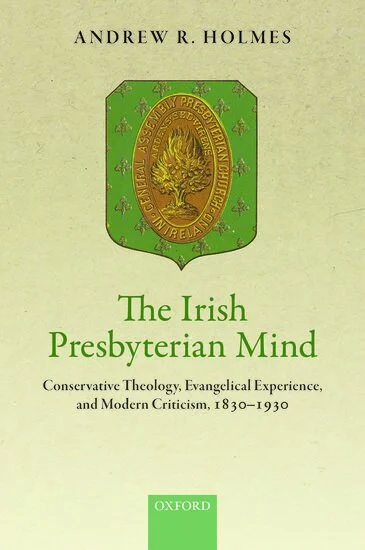
In this month’s Banner of Truth magazine, Stephen has a review of a book by his MA supervisor, Andrew Holmes. Although obviously focused on the Irish situation, there are many links to Scotland. For example, Holmes notes that by 1919 one reviewer of a book on the atonement could claim it as evidence that ‘Calvinism is dead in North Ireland and South Scotland’.

How had such a situation come about? Perhaps not by the means we might expect. Holmes writes: ‘In Scotland, organised revivalism after 1859 was more important than liberal theology in weakening attachment to confessional principles such as election and the nature of the atonement’.

You can read the review below:

The Irish Presbyterian Mind: Conservative Theology, Evangelical Experience and Modern Criticism, 1830-1930
Andrew R. Holmes
Oxford University Press, 2018
279pp., hbk, £65 / $85

What was the greatest threat to confessional Calvinism in the nineteenth century? Many would say liberal theology – but in this compelling book Andrew Holmes identifies conservative evangelicalism as a greater danger. Particularly as a result of revivalism, the very definition of what it meant to be a conservative church changed – even as many stood firm against higher criticism.

Although the word ‘Irish’ in the title might put some off, one of the many strengths of the book is how the Irish mind is rooted in the global picture – whether the eventual impact of the Scottish believing critics, the links with Princeton and Charles Hodge, the influence of Keswick holiness, the importing of American revivalism or Gresham Machen’s influence on the new Evangelical Presbyterian Church.

One area where Holmes seeks to draw a distinction between the Irish situation and the American one is over Darwinian evolution. Although usually sympathetic to the confessional position, Holmes equates Creationism with American Fundamentalism. Many Irish Presbyterian ministers came to accept Darwinism, and their initial resistance is described as seeming in hindsight ‘irredeemably out of touch’.

A question Irish Presbyterians must face in every generation is whether their ultimate loyalty is to Christ or the Union. Holmes notes that the appointment of one ‘believing critic’ as theology professor was opposed because he was a supporter of Home Rule, not because he rejected ‘the incredible dogmas’ of plenary and verbal inspiration.

Holmes’ thesis is that Irish Presbyterianism remained conservative during the period. Certainly, the majority of members and elders remained conservative Christians. Yet many ministers and professors were clearly unorthodox, but easily survived heresy trials by appealing to the language of evangelical experience. ‘The problem for conservatives was that they were not uniformly confessional’, nor was the new denomination formed by those who left.

Throughout, the book highlights the elasticity of ‘conservative evangelicalism’ and the needed recovery of confessional categories. 

You can read Stephen’s previous Banner reviews here.
We feel fragile, but Christ’s church is not

levyderby15.jpg

On Sunday morning, Stephen quoted Tabletalk’s recent ‘Update on the Church in London’ by Paul Levy. It’s an encouraging update in which he writes:

“London is a city that never stops and never sleeps. Yet, God has brought it to a standstill. People have more time to read, to study, to listen. Households have assumed a greater priority. For Christians, family worship has taken on an even greater importance, and fathers are needing to step up and take on the role that God has given them…There have been indications in the past year that people are becoming more open to the gospel. We have had more people interested in the gospel and coming to church over the last six months than at any time I can remember in my ministry. The numbers haven’t been huge, but some have even continued to watch the sermons online.

…What the long-term spiritual effects of this period will be are uncertain. Death, which has previously been hidden in our culture, is now confronting us as a nation, and we pray it is driving people to Christ.

In the midst of all this confusion and chaos, individuals and families are losing loved ones and there is tangible fear. The government thinks that it will have done well if the United Kingdom has a death toll of twenty thousand at the end of this virus. In the congregation where I serve, a father of nine has been taken home to glory in the last couple of days. We have felt the bitterness of death, the pain of separation, broken hearts, the feeling of deep and overwhelming sadness, and the uncertainty of the future. Of course, these things are true in normal times, but COVID-19 has brought these truths home to us so that the pain of this broken world and the preciousness of Christ are more real to us. 

We feel fragile, but Christ’s church is not.”

Screenshot 2020-04-28 at 23.04.58.png

Hearing of how God is working around the world today is important given the temptation we often face to idolise the past. As the following excerpt from David GIbson’s book Destiny reminds us:

‘When you start asking, “Why was the past better?” you’re denying the reality of God’s presence in the present. If you think things are worse, do you think God is no longer in control? Do you think he hasn’t brought you to the point where you are now and that he no longer loves you or has plans or purposes for you? To ask the question in Ecclesiastes 7:10—“Say not, ‘Why were the former days better than these?’ For it is not from wisdom that you ask this”—is unwise, because it forgets God”.
Often when we ask this question, it’s because we’re blind to the good things of the present and ignorant of past evil’.

IMG_6714.JPG

On the subject of rejoicing in what God is doing now, one of our friends from Casper RPC in Wyoming (where Stephen & Carla spent some time in 2013) wrote this recently:

“We often feel that even if this church plant closes and never takes off, serving in our church has been one of the most growing, stretching, challenging, humbling, rewarding experiences in our lives”.

May we be able to say the same!

The Promise-Driven Family: how our covenant theology shapes our daily lives

“Fear for the next generation is not profound or enlightened, it’s disbelieving and a lack of faith”

89505310_2863619153704016_8827381764470079488_o.jpg

Last month, two families from Stranraer attended the RPCI’s Family Day Conference, held in Cullybackey RPC. The talk, by Rev. Mark Loughridge, addressed the question of how our covenant theology should affect our parenting. It was a really helpful talk and you can listen to it below:

2020 Family Day Conference
Mark Loughridge

You can view the accompanying powerpoint here.